

Maslow Family Graduate Program in Creative Writing Marks Twenty Years of Nurturing a Literary Community
Maslow Family Graduate Program in Creative Writing Marks


of Nurturing A Literary Community
By Vicki Mayk MFA ’13
Words with Friends
“I joined the program because I wanted to be a better (fiction) writer,” says Sachar, an English professor at Commonwealth University – Bloomsburg who had successfully published academic writing.
Now Sachar is an established author in the horror genre with 10 books, stories in more than 60 publications and a Bram Stoker Award nomination to her credit. She cites mentoring by program co-founder Mike Lennon (“I still hear his voice in my head”) and support from members of her cohort as critical to her success.
In the two decades since the creative writing program’s founding in 2005, it has nurtured and supported writers like Sachar, helping them hone their craft, establish a writing life, publish their work and build a community of writers who support one another. All that — and they also earn master of arts or master of fine arts degrees.
Creative Writing Program Timeline
Creative Writing Program

In addition, students can qualify for scholarships or for a graduate assistantship. “Most low-residency MFA programs don’t have those — and we have seven scholarships as well as GA positions,” Hicks notes. Such factors have helped Wilkes attract students amid growing competition among creative writing programs and have landed the program on many “Ten Best” and “Top Twenty” lists for low-residency programs. Graduates’ publishing success has raised its profile.
In The Beginning
Creating a community of writers was part of the vision for the program from its inception.
“We created the community we wanted to have ourselves,”
Culver recalls that then-Wilkes President Tim Gilmour asked for ideas for new graduate programs, with an emphasis on online education. Culver’s and Lennon’s proposal was accepted. It took two years to come to fruition while an online platform was built and curriculum was developed. Working writers — many who became the program’s founding faculty — met to brainstorm best practices. Earning accreditation from the Pennsylvania Department of Education for a first-of-its-kind program required hours of paperwork, Culver says.
The late Pulitzer Prize-winning author Norman Mailer provided input at the request of Lennon, who is his biographer. Mailer believed the program should focus on developing professional writers. His suggestion that students could be admitted on the merits of their writing without holding a bachelor’s degree became a unique part of the program. Mailer was keynote speaker at the 2004 Pennsylvania Writers Conference, an event that preceded the program’s academic launch.
The emphasis on being a professional writer guided recruitment of faculty. “One of the key things that Bonnie and I decided was that we didn’t want people who were only teachers. They also had to be active (published) writers,” Lennon recalls.
From that idea grew the idea of pairing students with professional writers as mentors. “We didn’t want the ‘sage on the stage.’ We wanted a one-on-one mentor and that quickly became an idea behind the program that was very different from others,” Culver says.
Mentoring Matters

“I appreciated the one-on-one connection with a working artist,” Strayer says. “…That made all the difference in the world, to have a person who I could go to with my work, to learn things and to ask advice about the specifics that I was working on…that one-on-one connection was prioritized and made it possible for me to do my best work.”
Current student Lizzy Ke Polishan is having a similar experience working with poet and novelist Marisa de los Santos. Ke Polishan, already a published poet, wanted to try fiction and was nervous about writing her first novel. “She called me and said, ‘This is your book and I’m here to help you make this as good as it can possibly be,’” Ke Polishan says.
The program’s approach, says faculty member Ken Liu, balances workshop critiques with faculty mentoring, creating a nurturing atmosphere that encourages growth. “I think the philosophy of our program is that we’re trying to help writers discover who they are and to build their voices from the bottom up,” says Liu, a Nebula and Hugo Award-winning writer of speculative fiction. “You do have to develop an inner critical voice to figure out what allows you to tell the story you want to tell. However, we can do that by building you up, not by tearing you down.”
Current student Stacey Faustner praises Liu for his advice about her romantasy novel, Echoes of Eidrya. “I cannot put into words what his guidance has done for me and my writing. The standards he has held me to have increased not only my writing prowess, but my own standards for myself,” she says.
The mentor/student relationship continues after graduation, says program alumna Barbara Taylor MA ’08, MFA ’15. “She saw the promise in my work even when I could not,” Taylor says of her mentor Kaylie Jones, calling her “a lifelong friend.” Taylor has published three historical novels, including the most recent, Rain Breaks No Bones, under her mentor’s publishing imprint, Kaylie Jones Books.
Screenwriter Gabrielle D’Amico MFA ’17 still receives advice from mentor Susan Cartsonis. “As I transitioned from student to professional screenwriter, Susan continued to guide me through a new and intimidating industry. She introduced me to my agent and countless others, and she has shown endless patience in answering my questions about the business and the unwritten rules of show-business etiquette,” says D’Amico. “Susan and her production company, Resonate Entertainment, are working to bring my script, Now or Never, to life — so our work together continues, nearly 10 years after I completed the program. I often say that Susan was my mentor at Wilkes, and now she’s my mentor in life. The program’s promise to grads — ‘we stay with you’ — could not be more true. There’s no other program like it.”

A Community Made Real
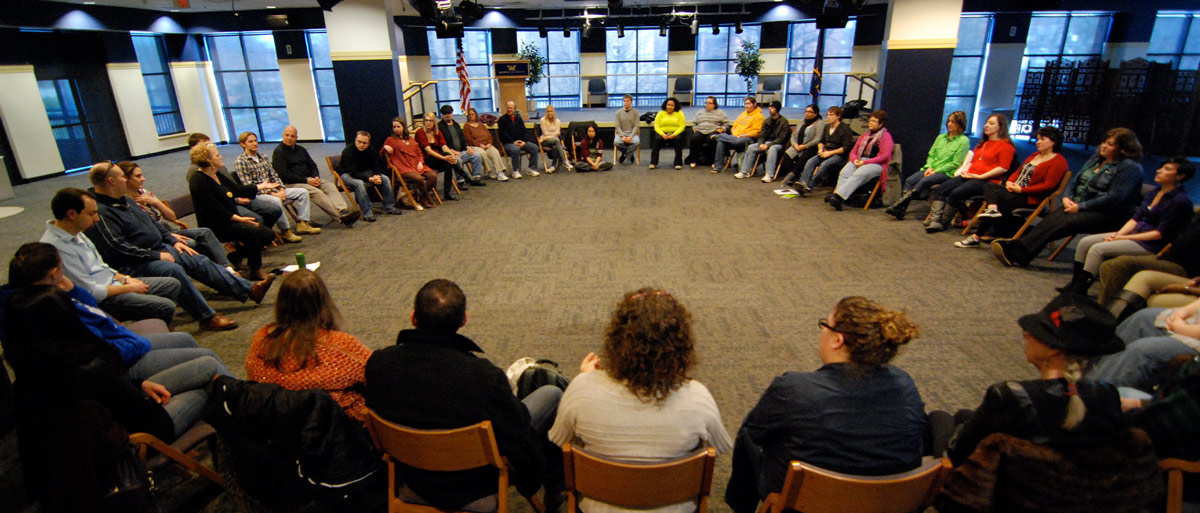
Those connections were a priority from the beginning, says Jim Warner MFA ’09. Warner was a member of the program’s first cohort and served as its assistant director from 2006-2012. “We talked about it as a community made real twice a year,” Warner says. It kindled a sense of belonging that is hard to replicate. “What (students) cared about was the space that they were able to inhabit with the cohort that they built.”
The intangible nature of the Wilkes writing community led nonfiction faculty member Jessica Goudeau to ask Ibrahim Ahmad, executive editor at Viking Press, why he comes to Wilkes, twice a year. Ahmad serves as an outside reader for students’ creative theses. “He pointed around the room and said, ‘There are no cliques here.’ He told me he’d been to all kinds of prestigious places, but only at Wilkes did he find the collegiality and support that is a hallmark of our program…Wilkes combines rigorous standards with true diversity of backgrounds in a place where everyone also really supports and encourages one another,” says Goudeau.
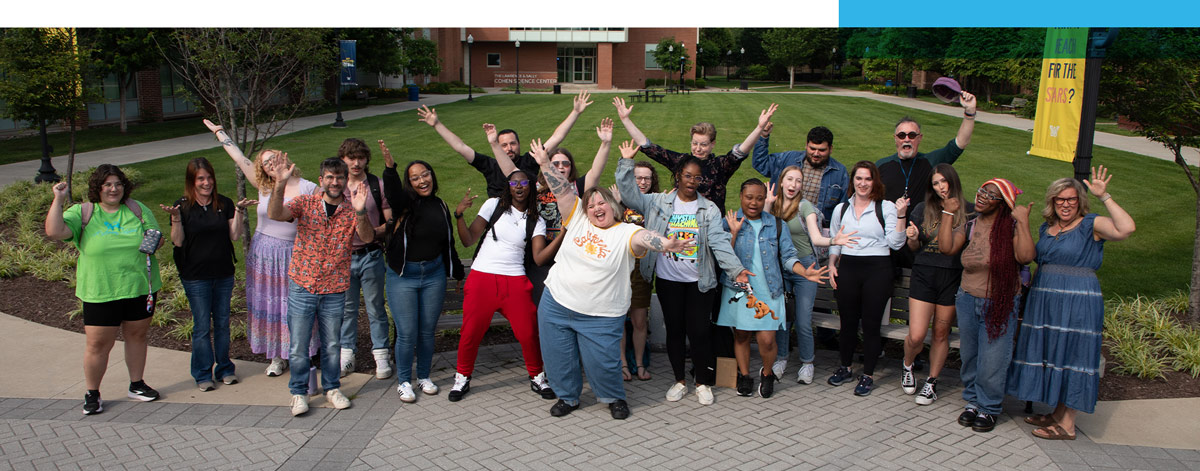
Hicks often says there’s a bit of magic at work during residencies — a claim that is hard to believe until it is experienced.
Terry Dwyer MFA ’25, a retired New York State Trooper and lawyer, was skeptical at first. “I’m very cynical… and David Hicks, the first day, was talking about a magical place. And I’m thinking, ‘Oh, no, here we go,’” Dwyer recalls. “But everything David said that first night came to fruition throughout that week. You met people that became lifelong friends, and you got into this community. And I truly feel — the hard cynic, the retired cop and lawyer — that there’s truly magic at Wilkes.”
Mike Lennon and Nancy McKinley End 20-Year Teaching Legacy
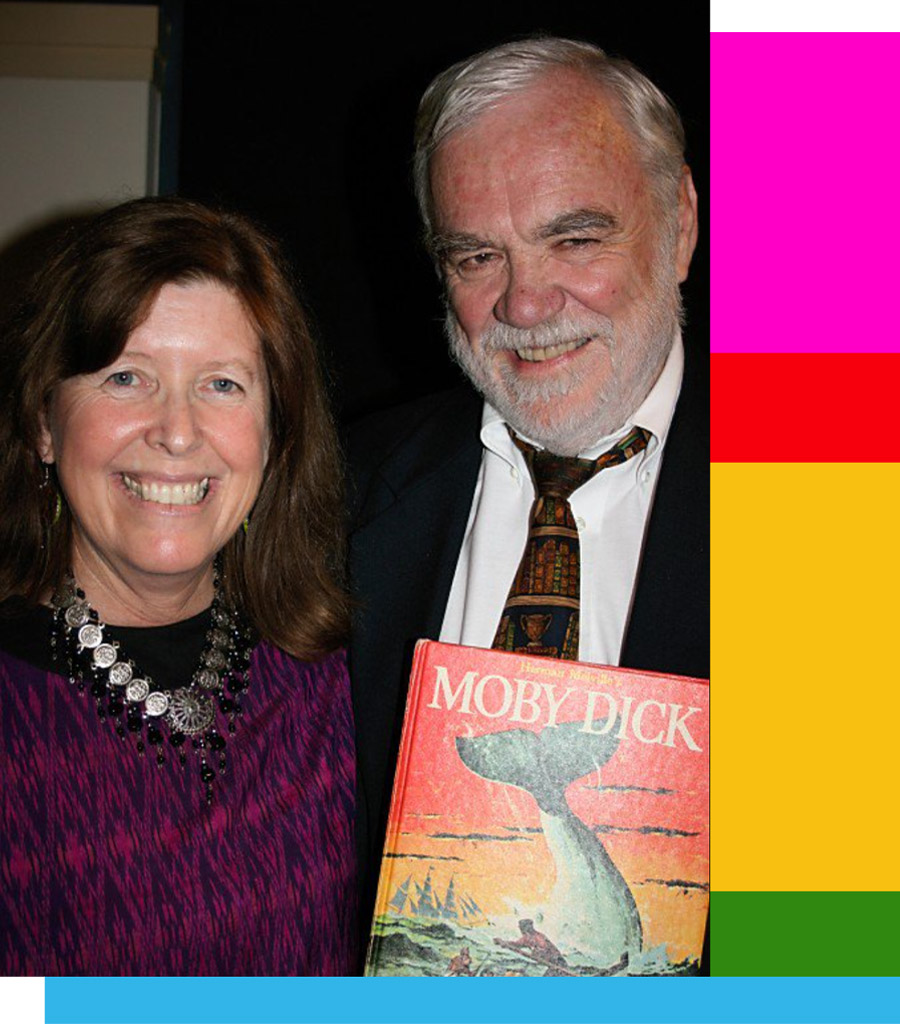
All of the students in the Maslow Family Graduate Program in Creative Writing start their journey in the 501 course Foundations of Creative Writing.
For the program’s first 20 years, the class — referred to as “writing bootcamp” — was taught at every residency by founding faculty J. Michael Lennon and Nancy McKinley. The announcement in June 2025 that they would step down was a milestone in program history. Lennon and McKinley will continue to mentor students while stepping away from teaching 501. McKinley also is taking a break from teaching the MFA teaching practicum.
“Mike and Nancy are synonymous with the experience in our program,” says program director David Hicks. “For many hundreds of students, studying with Mike and Nancy equals creative writing.”
Each new cohort spent their first week guided by Lennon, who shared literary wisdom in his New England accent, and McKinley, a warm, knowledgeable and supportive teacher. The 501 course introduces elements of craft — image, voice, setting, character, story — illustrating how they work across five literary genres. Over two decades of co-teaching, the pair developed a complementary teaching style.
“At a certain point, I would tell a story, and Nancy would say, ‘that reminds me,’ and then she would tell a story,” Lennon says. “We were like two comedians up there trading positions and trading lines.”
Taylor Polites MFA ’10 now teaches the 501 class with playwright Christine Renee Miller. He began shadowing Lennon and McKinley 13 years ago, gradually transitioning to teach some of the sessions and share the lead-instructor role.
Reflecting on their legacy, Polites says, “Mike is the old school literary lion: the person you want to listen to because of the depth of his experience and knowledge. Nancy has a similar depth of knowledge…She is a pedagogical master and thinks in a very strategic and smart way about building an educational experience.”
The 501 class also helps to develop relationships among the new cohort, instilling the sense of community that is the essence of the Maslow program. Working to ensure students felt comfortable was a priority. “Mike and I would keep a look out at the group. If somebody was withdrawing or not participating, we talked to them,” McKinley says.
The emphasis on community is reflected in “There Is No Word For Good-bye” by Native American poet Mary Tall Mountain — the poem McKinley read to 501 classes at the end of each residency. Miller read the poem in tribute to the two faculty when they announced their departure at the June 2025 banquet:
We just say, Tlaa. That means,
See you.
We never leave each other.
When does your mouth
say goodbye to your heart?