

Giving Back: Wilkes Celebrates First Graduates of the bonner leader program

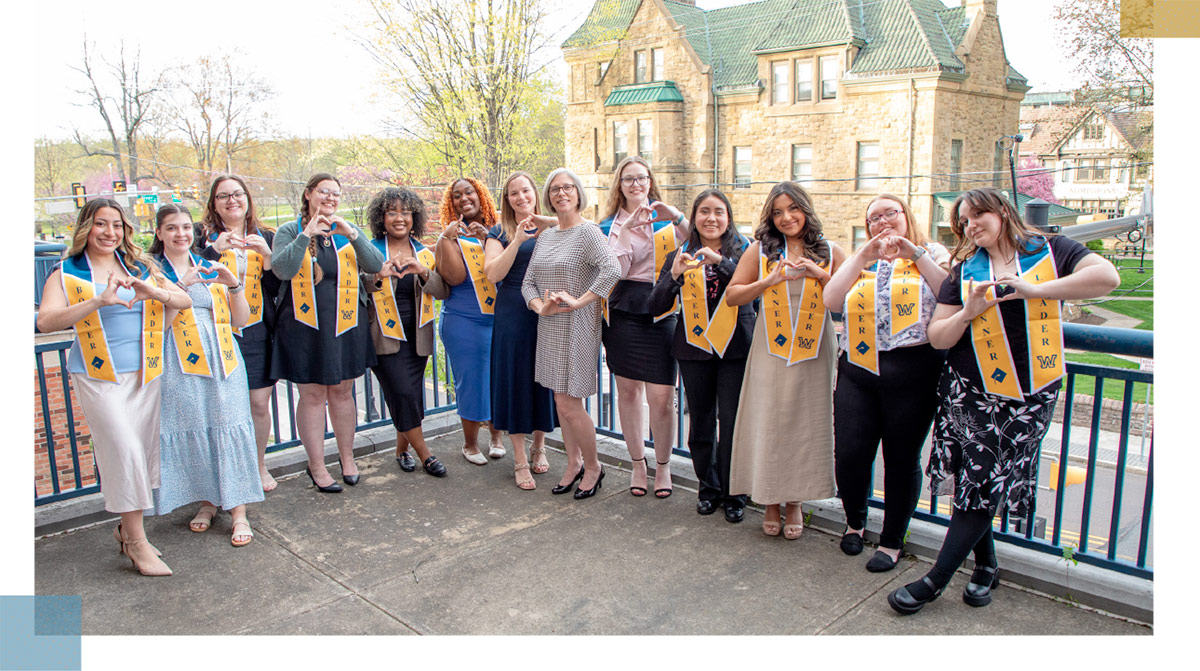
The program started at Wilkes with an idea from alumnus William “Bill” Bush ’68, who approached the University’s leadership with this incredible opportunity. Flash forward a few years, and Wilkes has achieved a tremendous milestone, celebrating 11 students who graduated this May from the first-ever Wilkes Bonner Leader Program cohort.
“Access to Education, Opportunity to Serve”
Wilkes University is the only campus in northeastern Pennsylvania to feature the Bonner program, offered by more than 60 colleges across the country. Each year, campus chapters recruit students with financial need and a passion for civic engagement. Following an application and interview process, students accepted to the program receive four years of financial aid support in exchange for work at various nonprofit organizations in the surrounding community.
program is
in my blood.
– Bill Bush ’68
“The Bonner program is in my blood,” says Bush. The program continued to blossom nationwide, and when Bush, a first-generation college student, had achieved success for himself, he wanted to give back. “Wilkes was certainly on my mind. After I graduated, I got into Columbia University to pursue law school, and I credit Wilkes for helping me to get there. It never would have happened without Wilkes.”
With Bush’s encouragement, Phil Ruthkosky, dean for student success, reached out to Hackett in 2019 to learn more about the program’s impact. He attended the annual Summer Leadership Institute and immersed himself in the workshops to see the program through the lens of a student. At the end of the event, Ruthkosky was impressed, noting the students’ enthusiasm and excitement.
“As I gained a more comprehensive understanding of Bonner and the enduring impact it has on students and the communities they serve, I became very enthusiastic about the program,” says Ruthkosky. “I felt it was perfectly aligned with our core institutional values of service, diversity, community and mentorship.”

The Bonner Leader Program started at Wilkes in August 2021. With guidance from Hackett, Ruthkosky took ownership and moved forward. He formed an advisory board of faculty and staff from different departments to help shape the program for Wilkes, building strategy and leveraging resources for staffing, marketing and recruiting the first cohort.
Two weeks after the first cohort began in the fall of 2021, Catie Becker, director of civic engagement, joined Wilkes. Becker, who would oversee the program for the next two years, was both excited and nervous. She felt the pressure — and freedom — to tailor the blueprints and build the foundation of Bonner at Wilkes, giving students and the community their first experience in the program. For her, it was an incredible responsibility, one she took seriously and with great pride.
“Whatever we did then was likely going to be the legacy for this program, so it gave us some grace to figure out what that looks like,” says Becker. “This first cohort helped to create the mission, vision and values and set the culture for all our students. They have a voice, and they directly helped us to build this program.”
The first two years were critical in establishing the program’s campus identity, as well as a strategy for marketing and recruitment. The first year proved especially challenging due to limited contact during the COVID-19 pandemic. Wilkes forged ahead, using the model provided by the Bonner Foundation and adapting it to create a program framework tailored to the University. The unique approach allowed the Bonner Leader Program to be embedded into the Wilkes mission and vision, inviting engagement from employees and the community.
The Framework
For the second year, students expand their leadership roles on campus and at their community partner sites while continuing service work and cohort sessions. The cornerstone activity in year two is the Sophomore Exchange event, which brings Bonner students from multiple institutions together to network, collaborate, share ideas and forge meaningful connections to create more impact in their communities.
In the third and fourth years of the program, students continue their cohort leadership sessions and take on more significant projects that enhance their community partner’s capacity to serve. Third-year students can travel abroad and participate in different service activities. Fourth-year students complete a capstone project that connects their academic knowledge and four years of work with their community partner. The capstone highlights lessons learned and collaboration with faculty and staff, while recognizing students’ hard work and dedication. This cornerstone activity, celebrated during the Bonner graduation on campus, marks their official completion of the Bonner Leader Program.
“Our students are resilient, curious, dedicated and motivated. It has been so fulfilling to watch them grow and learn and make an impact with our community partners,” says Burns.
“Call Out with Kindness”
“I was very much in my shell. I didn’t really talk to many people. But now I can stand up in front of a room and talk to everybody in the room. I’m confident in what I say,” says Julia Bouder ’25, an English major with minors in Spanish and women’s and gender studies. Bouder, from Lancaster, Pennsylvania, worked with Maternal and Family Health Services, Inc., as her dedicated community partner. Her capstone focused on creating educational materials and training for staff and volunteers who conduct community outreach on the resources and services available through MFHS.
there is always something that you could be doing to help the people around you.
– Brenda Arias ’25

Quintana-Avila, from Scranton, Pennsylvania, is a first-generation Mexican-American. She spent much of her four years in Bonner at the Greater Wyoming Valley Chamber of Commerce site. For her capstone, Quintana-Avila presented research for a Colonels EMPOWERed Program Pilot, a supplemental English as a Second Language program to prepare Wilkes students for life beyond graduation and increase their confidence in English. Her proposal included a program description, business model, budget, marketing and recruiting plan, anticipated outcomes and feedback from a student survey that she created and distributed to assess the need for such a program at Wilkes.
“Step In, Step Up, Step Back”
Through work with their community partners, Bonners learn to identify gaps and use the skills and knowledge they gain at Wilkes to find innovative ways to resolve issues, capitalize on opportunities and expand site capacity, either by helping clients directly or helping from behind the scenes.

“Through the root cause analysis, we’re able to look at why a certain problem happened and what we can do to prevent it from happening again,” says Soriano.
Soriano has worked with the Jericho Community Center for the last four years. For her capstone project, she planned and coordinated a health and wellness fair to inform the local Hispanic community about available resources in Wilkes-Barre.
The Impact
A major in communication and media studies with minors in legal studies, women’s and gender studies, sociology, psychology and criminology, Edweana “E” Alexis ’25, from Saylorsburg, Pennsylvania, shares the impact of the friendships she made through the program. “Bonner has helped me connect so closely with so many students and faculty members and staff members that I would have probably never been able to address or meet,” she says. “I love the friendships and relationships that you make in Bonner. That’s a very large part of why we have such a strong program here at Wilkes.”
The Bonner program is a gateway for students to engage in the community, and it aids students in their personal and professional lives, helping to establish their values and foster their growth as individuals. These values act as a compass, guiding them to identify organizations and leaders aligned with their principles, to seek development opportunities that fuel their passions and to understand how their actions and career choices affect the community at large.
The Bonner Leader staff has also been changed by the growth of the students, new partnerships in the community and success in helping others. They enjoyed the opportunity to work with a diverse group of students, learn about their cultures and families and build a relationship of trust.
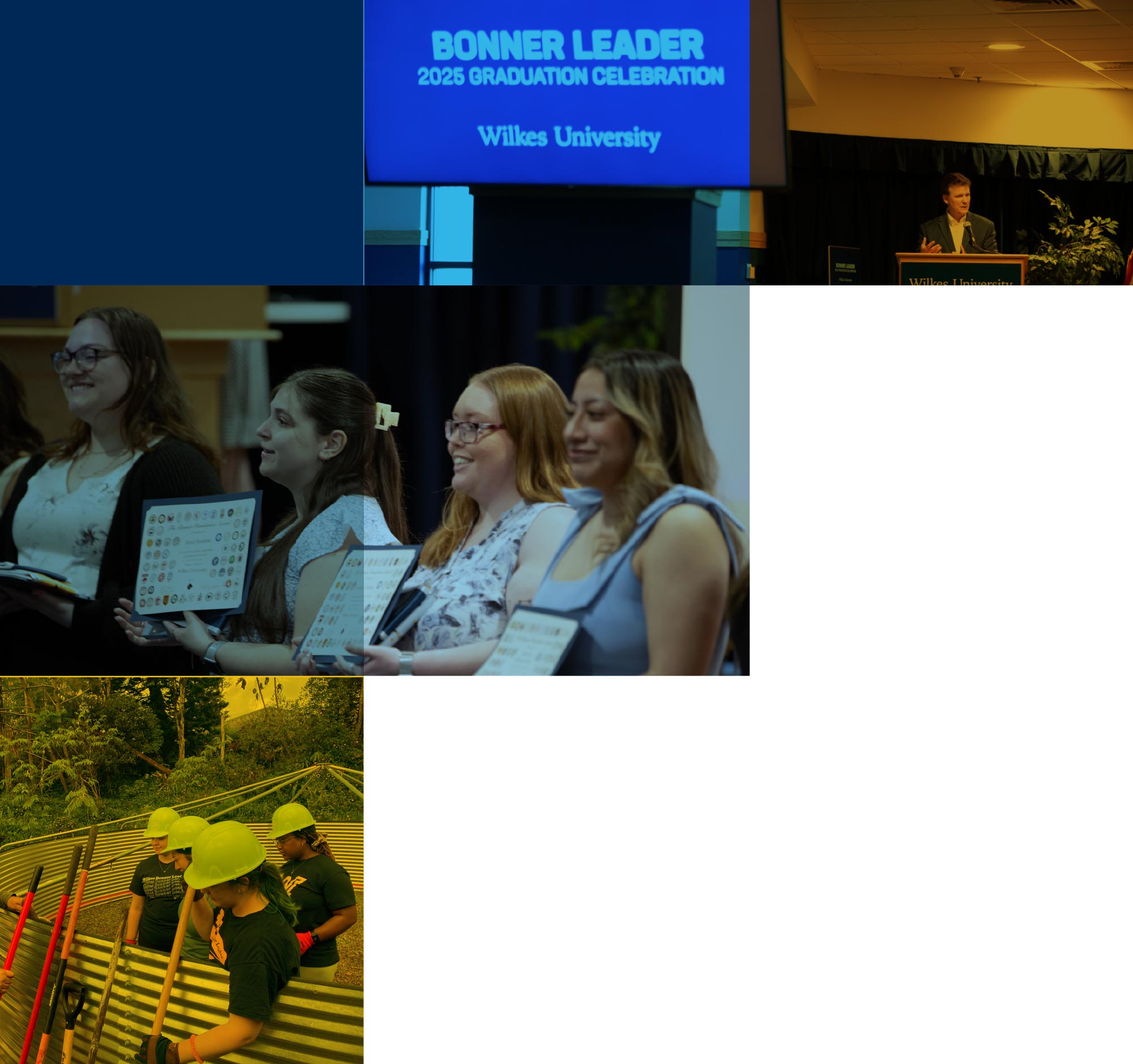
Ruthkosky felt the high points and successes of the Bonner Leader Program as he spoke to the students at their graduation ceremony. Standing on the stage, he recounted the students’ application essays, reminding Bonners of their excitement, passion and growth over the past four years.
“It took the first graduating class to fully understand and appreciate the profound influence this program has had on our students and the community they serve,” says Ruthkosky, further adding how much respect he has for Becker and Burns. He recognizes the hard work and dedication they put into getting the program off the ground and bringing concepts and life-changing experiences to fruition. “I could not be more proud.”
The Future
“We started this program together. We figured out what to do. We figured out what worked. We figured out what didn’t work along the way,” says Becker. “Realizing what we’ve built over the last four years is beautiful.”

“The investment is already paying off,” Bush says, noting the significant milestone of the graduates. “I’m optimistic about the future, and I’m very proud. For the graduates, I think they learned a lot, are committed to being thoughtful community members, and I think if they take those lessons as they move forward, it will benefit them and communities beyond.”
Bush’s gift will help grow the program, inspiring innovation and reinforcing the University’s commitment to fostering student leadership and civic engagement.
“Bill’s generosity has provided us with the resources and support that enabled this program to flourish in our first four years. He’s been instrumental,” says Ruthkosky.
Looking ahead, Becker and Burns will roll up their sleeves and identify new and effective ways to expand the program and leverage resources, providing students with even more meaningful learning opportunities. Some goals include financial assistance for more students, increased leadership experiences on and off campus, additional operational support and more trips. Recruitment for future cohorts is ongoing and applicants continue to show promise of the Bonner legacy in good hands with community-minded, compassionate individuals furthering its mission. The team hopes the program gains enough traction that they will soon need a waitlist for applicants.
Arias is excited to see the Bonner program continue and grow, so that future students can experience the same meaningful journey she did. “Everyone has a voice and a platform — it’s about using them intentionally,” says Arias. “We all have the power to create change; it just comes down to the impact we hope to make.”