

A Special Time in Wilkes Baseball History: The Gene Domzalski Years, 1970 to 1978





Under Head Coach Gene Domzalski MS ’71, the Colonels had already shocked national powerhouse Marietta College with a 6-3 win in the opening round. Now, they were down to their final out.
With one Colonel on base, it was do or die for John “Ken” Suchoski ’78. The sophomore backup replaced starting catcher Jack Keller ’76 who collided with a teammate chasing a foul pop two weeks earlier. Suchoski hit a 400-foot drive over left field center to tie the score. Sophomore pitcher Manny Evans ’77 quieted Mansfield bats and sent the game into extra innings. Wilkes scored three times, including a two-run home run by Dave Hungarter ’79. The Colonels held off a Mansfield rally to win 8-6.
Evans remembers that 10th inning. “Our sure-handed infield committed three successive errors to load the bases with no outs. All came on ground balls off my knuckleball. None were hard hit.” Evans says. “After Coach Domzalski came out to the mound to give us a pep talk, we turned a double play and then got the final out.”
Wilkes beat Ashland (Ohio) 13-7 in the next game, becoming the lone undefeated team in the double-elimination tournament. After downing Ashland in the elimination bracket, Mansfield earned a rematch with Wilkes in the championship finals. To win the title, Mansfield would need to beat the Colonels twice.
Despite scoring four runs in the eighth inning, Wilkes came out on the losing end of a 7-6 contest in game four. The fifth game was winner take all. The resilient Colonels wasted little time proving they were the best, blasting four home runs to take a 6-0 lead in the first inning. They never looked back, shutting out Mansfield 11-0.
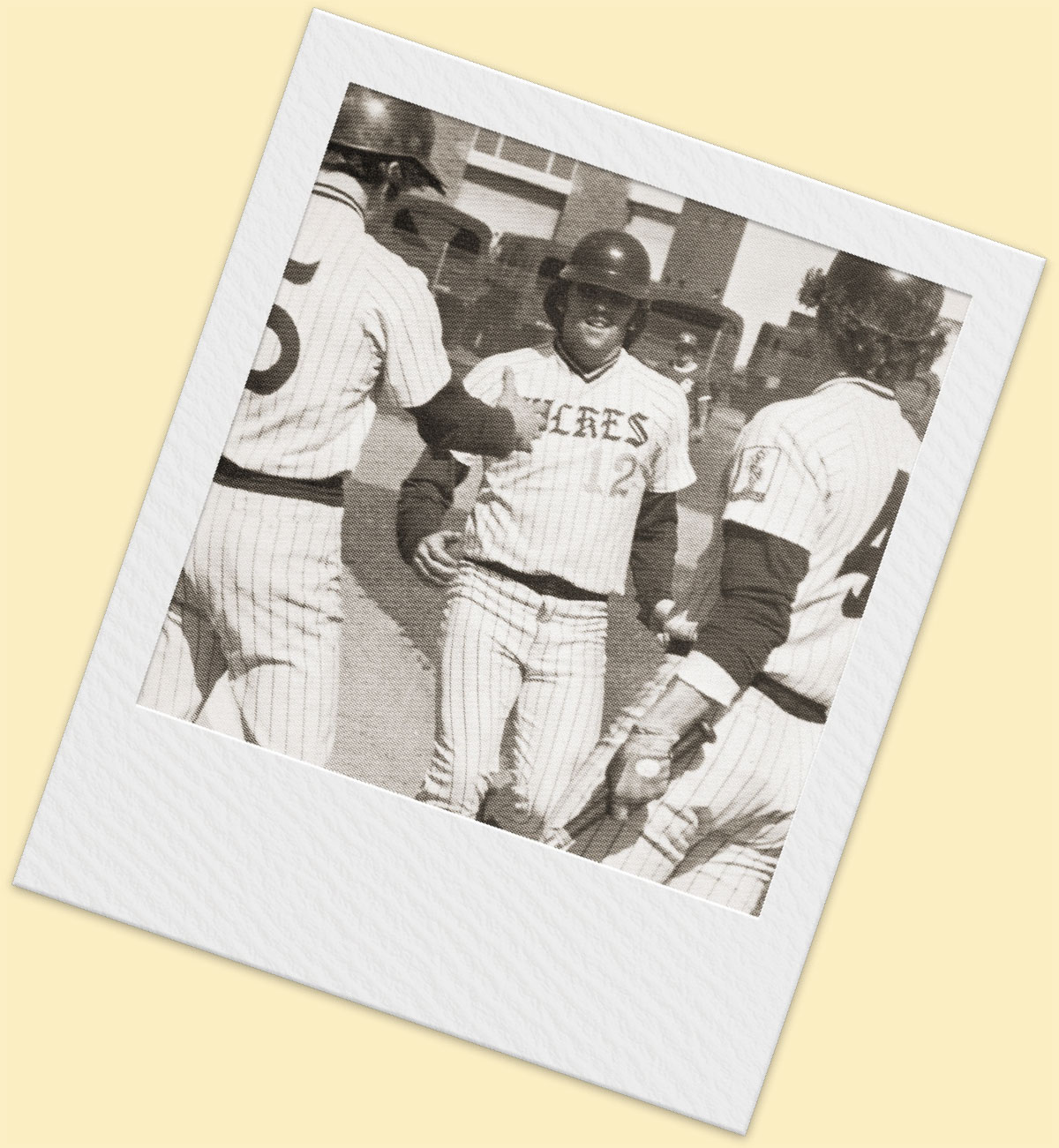
With the Mideast Regional championship win, Wilkes earned a spot in the first NCAA Division III World Series in Marietta, Ohio, along with Ithaca College (New York), Montclair State College (New Jersey) and the eventual champion, Stanislaus State College from Turlock, California.
Unfortunately, that’s where the Colonels’ winning streak ended. Wilkes lost the series opener 2-1 to Montclair State, which came into the World Series as the top Division III team in the nation. It was a tough break for sophomore starter Andy Kresky, who allowed only three hits. The Colonels lost the next game to Ithaca 16-3.
The World Series experience couldn’t diminish what the team had accomplished in 1976 — a regional title, 21-8 record and first 20-win season ever for Wilkes. The World Series marked the end of college careers for seniors Tony Schwab ’76, Steve Leskiw ’76, Dave Trethaway ’76 and Greg Snyder ’76, as well as the injured Keller.
Going into regionals, left-hander Jim Stehle ’77 was the team’s pitching ace. With his 95-mile-an-hour fastball, he posted a 6-1 record and struck out 65 batters in 51 innings. Stehle ran into arm injuries in the fifth inning of the first game of the regional opener against Marietta and was unable to pitch again in the Division III tournament.
Despite the setback, one week later, Stehle was selected by the Chicago White Sox as the 80th player chosen overall in the fourth round of the annual Major League Baseball draft. He ultimately turned down Chicago’s offer and stayed in school to earn his degree.
1977
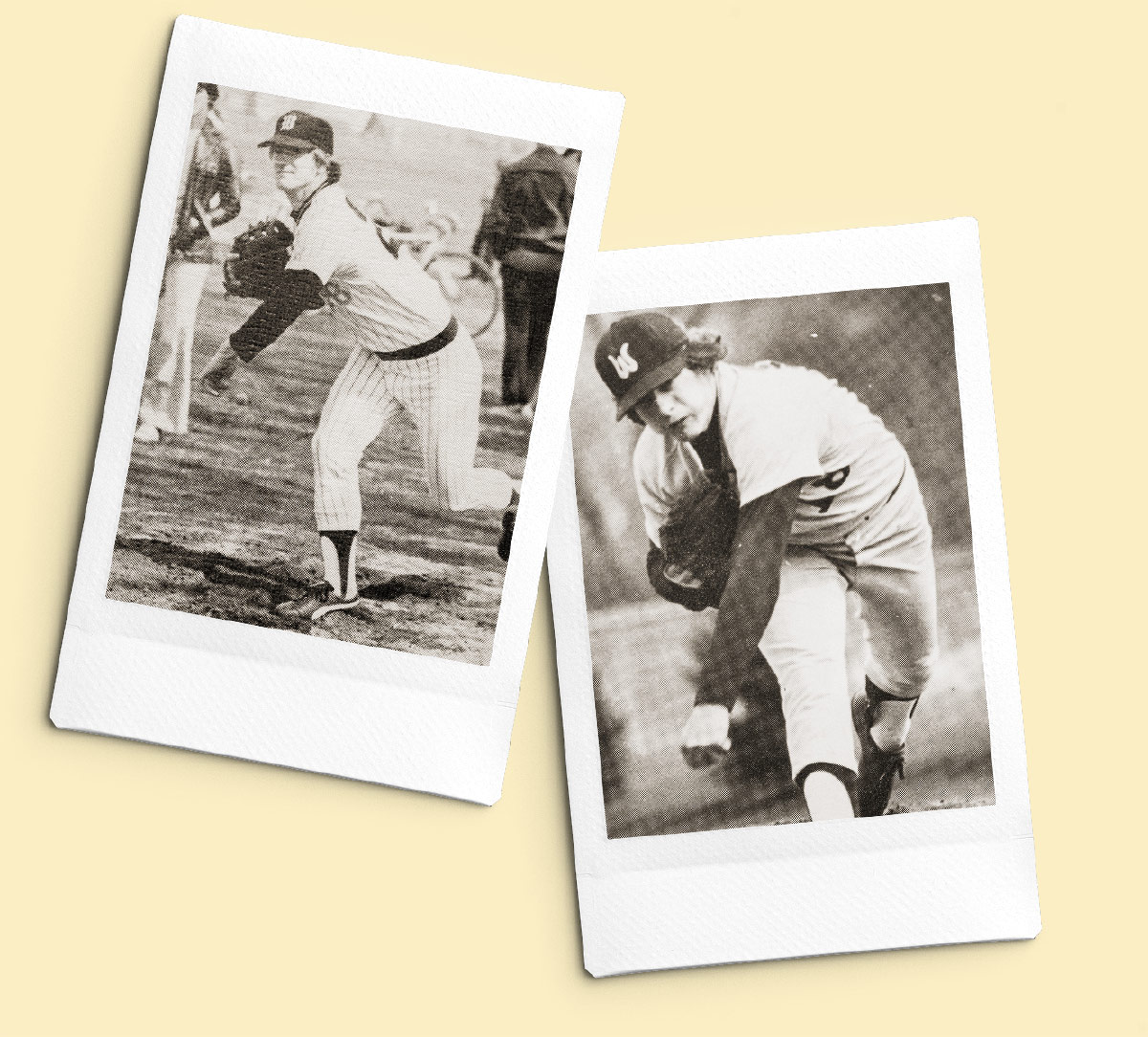
The Colonels were dominant again in 1977, winning 20 of their first 22 games. They captured the Middle Atlantic Conference title by beating Scranton and Gettysburg. Wilkes made the regionals again. Unfortunately, the team fell flat in Wooster, Ohio, losing to Marietta and Widener, ending the year at 20-4. Pitching was supreme in 1977 as Stehle (6-1), Kresky (4-1) and Evans (6-1), who hurled mostly in relief, accounted for 16 of the wins.
Stehle was honored as the MAC’s MVP. After turning down a major league contract the year before, he was selected in the fifth round of the 1977 MLB draft and signed with the San Diego Padres. Supczenski, a junior center fielder and .404 hitter with eight home runs, was chosen in the 15th round by the New York Mets.
1978
Many felt that the 1978 team may have been the best in school history. The Colonels concluded the season 25-5, their third straight twenty-win season. Four of the team’s losses came by one run. As a team, Wllkes batted .353, the third highest among the nation’s NCAA Division III schools.
Kresky had a brilliant senior season, accumulating a 9-2 record while striking out 100 batters in 80 innings. He won MAC MVP honors and was a third team selection on the American Association of Baseball Coaches NCAA Division III All-American team. Other Wilkes All-Americans included senior second baseman Schoen, second team by virtue of his .442 batting average, and catcher Suchoski, third team on the strength of a .412 batting average with 41 runs batted in.
The loss to Wooster in the regionals proved to be the final game for Domzalski, who retired later that month to devote complete attention to his new role as the College’s associate dean of admissions.
FROM STANDOUT ATHLETE TO STELLAR COACH
Prior to Wilkes, Domzalski enjoyed a rich history as an athlete beginning at Newport Township High School, where he earned nine letters for football, basketball and baseball. After graduation in 1957, he accepted an athletic scholarship to the University of Wyoming. During his first season on the football team, Domzalski was a running back and kickoff returner. The team played in the postseason Sun Bowl. In spring 1958, he was the starting shortstop for the Wyoming baseball team and hit .327.


After retiring from baseball in 1964, he returned to Wyoming to complete his bachelor’s degree. Domzalski also served as a student assistant coach on the baseball team. He came back to the Wyoming Valley in 1965 to teach and coach basketball at Newport Township. When the Greater Nanticoke Area School District was founded in 1966, he was the first baseball coach, leading the team to one PIAA District II championship and three Southern Division championships in three years. He joined the Wilkes physical education faculty for the 1968 fall semester and assisted Rollie Schmidt as line coach on the 8-0 undefeated team. Domzalski assumed the baseball coaching reins from Schmidt in 1970, when he later took over as coach of the golf team.
Dave Kaschak ’71, MS ’81, who succeeded Domzalski as the Wilkes baseball coach in 1979, was the starting catcher on his 1970 and 1971 squads. He remembers that Domzalski had immediate credibility with his players because of his extensive baseball background. “Gene treated everyone the same. We all had a chance. He met with us by position and told us where we stood,” Kaschak says.
Trethaway felt that different sports still provided the experience of being part of a team. “You get to know your role on the team, realize how your performance affects your teammates and put yourself into pressure situations and needing to perform,” he says.
OUTSTANDING ASSISTANT COACHES
Bob Duliba ’75 replaced Goobic as an assistant after he graduated from Wilkes at the age of 40. Prior to entering Wilkes in 1971, Duliba spent 17 years in professional baseball. As a 17-year-old graduate of Newport Township High School in 1952, he signed a contract with the St. Louis Cardinals. He played four years in the Cards minor league system and served a three-year military obligation with the Marine Corps before making his major league debut with St. Louis in 1959.
He spent all or part of seven seasons with four major league teams, appearing in 176 games and compiling a 17-12 record. After retiring from baseball in 1971, Duliba had a chance meeting with Domzalski, who suggested that he consider attending Wilkes since his military service made him eligible for the GI Bill. Duliba enrolled and worked with the Colonels as an undergraduate.
When Wilkes reached the national stage, it became apparent that they needed a deep and talented pitching staff to remain viable. Without three or more topflight pitchers, it would be impossible to compete with the top Division III teams. As a pitching coach with a wealth of experience, Duliba helped develop Stehle, Kresky, Harcharufka, Evans and Carl DeFelice ’80 as pitching mainstays for the 1976-78 seasons.
Jerry Bavitz ’75, a relief pitcher in the early 1970s, joined Wilkes as a graduate assistant in 1976. He was a student of the game who absorbed a lot of knowledge working with Duliba. In 1978, he took over coaching pitchers under Domzalski when Duliba left Wilkes to teach and coach baseball at Wyoming Area High School.
Bavitz spoke about Duliba and what he meant to the program. “Bob was really great at instilling attitude and confidence into all the guys he coached,” he says. “If he thought a player needed a third pitch, he would teach it to him. If a player wanted to use his fastball more effectively, he would help with that. He was serious about teaching pitching, and the players wanted to be taught.”
THE DOMZALSKI LEGACY
One of the most prolific pitchers in Wilkes baseball history, Stehle agrees with White. “I never heard Gene utter an inappropriate word. If he was mad, he might yell, ‘Jeepers Christmas’ or something like that. This carried over to our players, who refrained from getting into verbal battles with the umpires or opposing teams,” he says.
In summing up Domzalzki’s nine seasons, Leskiw said it the best about his coach. “He instilled in us a work ethic and discipline that made us successful in baseball and in life. I know for me, and I can speak for most of the guys, we would not want it any other way,” he says. “We had a great time and had fun playing the game.”